The official selection for the 79th Cannes Film Festival, held from May 12–23, 2026, has been revealed. While some films contain political contexts, the overall selection is characterized by narratives centered on character psychology and personal conflict. To cover all 21 invited films, this preview is divided into two parts. We look ahead at the stories the Cannes Film Festival holds this year.

Amarga Navidad (Bitter Christmas)
Pedro ALMODÓVAR
A work that explores the boundaries of creative ethics through a structure that intersects the past and the present. In an interview, Pedro Almodóvar noted that this is “the film where I treated myself most cruelly,” revealing the self-reflective nature of the project. Given its focus on ethical issues, uncomfortable moments are expected, but these elements are highly likely to function as a means of strengthening the film’s tension. The structure, which alternates between the present and the past, is also expected to unsettle the audience’s perception, leaving a more powerful impression upon reaching the narrative’s conclusion.
Parallel Tales
Asghar FARHADI
A loose remake of the Polish television drama Dekalog VI (The Decalogue: Six). As it borrows only the structure of the original while shifting the setting from 1980s Poland to modern-day Paris, it appears to be an attempt to reinterpret the same story in a different context. The premise of a young man falling madly in love with an older woman, leading to a dangerous obsession, remains. Considering that the original work dealt destructively with ethical issues regarding sexuality, and that Farhadi’s previous works have primarily focused on moral judgment, this film is expected to more sharply reveal the boundaries of moral judgment related to sex.
The Unknown
Arthur HARARI
A film based on the graphic novel The Case of David Zimmerman, a collaboration between Director Arthur Harari and his brother, Lucas Harari. It tells the story of photographer David Zimmerman, who swaps bodies with a woman and begins a journey to reclaim his own body. Since the original narrative focuses on the search for identity through the premise of physical change, this work is interpreted as focusing more on the character’s interior than on external transformation. Given the director’s filmography, which often uses macro events to depict character psychology, a powerful synergy with the original narrative is anticipated.
A Woman’s Life
Charline BOURGEOIS-TACQUET
The director’s second feature film. It depicts the process of Gabrielle (55), a middle-aged woman devoted to her family, beginning to falter after meeting a novelist for an interview. As the director’s previous film, Anaïs in Love, depicted heavy themes such as impulse, desire, and love through comedy, attention is focused on how this film will handle another heavy subject: the family and ego of a middle-aged woman.
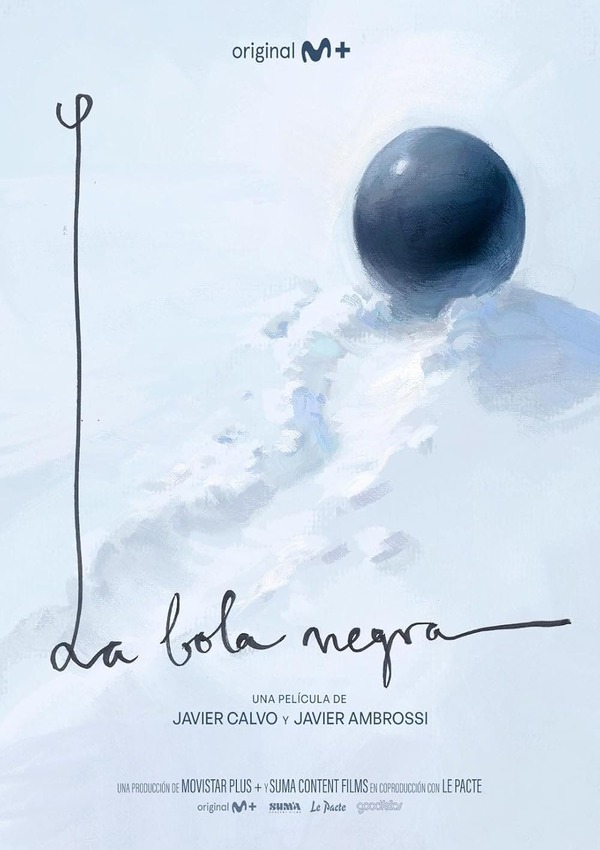
La Bola Negra (The Black Ball)
Javier CALVO, Javier AMBROSSI
A queer work that explores the lives, sexuality, desires, pain, legacy, and transmission of LGBTQ+ individuals through a multi-narrative structure spanning three eras (1932, 1937, and 2017). In interviews, the directors stated that they wanted to address “what it meant to live as a gay man in Spain” across different periods, suggesting an intent to show how a specific identity is experienced amidst historical changes. Furthermore, the comment that it felt like “remembering and excavating, not imagining” implies that the story was reconstructed with a sense close to actual experience.
Coward
Lukas DHONT
Set during World War I, Pierre, a young Belgian soldier, questions the concepts of cowardice and heroism. The director’s statement that the protagonist “discovers love and art in the trench shows” suggests a connection to performances intended to boost soldier morale. Given that the director’s previous two films were coming-of-age dramas regarding the establishment of sexual identity, it is highly probable that this film depicts the struggle between the identity of a soldier and that of a human being through the growth of an individual.
Another Day
Jeanne HERRY
The story of Garance, a young actress who is not yet a star, as she faces death following a struggle with alcoholism. It is highly likely that this film once again depicts the process of human growth—moving past the past toward the future—as seen in the director’s previous work, All Your Faces. Considering the director herself was an actress, the film is interpreted as capturing the professional conditions and emotional nuances of being an actress with detailed direction.
Das geträumte Abenteuer (The Dreamed Adventure)
Valeska GRISEBACH
Set in a border town in southeastern Bulgaria (the tripoint of Bulgaria, Greece, and Turkey), a woman engages in illegal trade to help an old acquaintance and confronts her own desires and past. As with the director’s previous work, Western, the cast consists mostly of non-professional actors. This suggests a restrained and slow direction, characteristic of a key director of the Berlin School.

All of a Sudden
HAMAGUCHI Ryusuke
Director Ryusuke Hamaguchi’s first French-language film. It depicts the transformation of a nursing home director in the suburbs of Paris, who attempts to introduce human care technology, after meeting a terminally ill playwright. The slow direction shown in the director’s previous works is likely to unfold with the heavy emotions of life and death in this film. Additionally, as the film focuses on the emotions and changes of the characters, his detailed psychological depiction will likely function in a way that allows the audience to experience the characters’ states more directly.
The Man I Love
Ira SACHS
Set in 1980s New York, the film depicts the process of actor Jimmy George, who is facing death, sublimating his precious remaining time into the beauty of art. The keyword “Musical,” repeated in various reports, indicates that the film actively utilizes musical elements. Furthermore, expressions like “the city” and “friends” suggest the possibility of portraying the relationships and environment of an artist community beyond a personal narrative. Unlike Ira Sachs’ Peter Hujar’s Day, which explored an artist’s life in the 1970s through dialogue, this work is interpreted as an attempt to expand similar themes through the more sensory medium of music. However, as there is no experience in the director’s filmography of positively sublimating the subject of death, whether this narrative will convincingly engage the audience remains a key point.
El Ser Querido (The Beloved)
Rodrigo SOROGOYEN
The film depicts the relationship that follows when a famous film director and his daughter, an unsuccessful actress who have been out of touch for 13 years, reunite to shoot a film together. Considering the director’s history of maintaining a generally melancholic tone, the reunion of this father and daughter is likely to unfold around a conflict of complex emotions rather than simple reconciliation. The first meeting scene between the father and daughter, consisting of a single take lasting approximately 18 minutes, appears to be a key sequence that directly reveals the psychological distance and tension between the two characters. Depending on whether this story ends in the restoration of the relationship or the development of another narrative, the emotional texture of the work will vary significantly.
Minotaur
Andrey ZVYAGINTSEV
Director Zvyagintsev’s first new work in nine years. The story follows a high-ranking executive at a Russian corporation who simultaneously experiences a corporate crisis and his wife’s infidelity while preparing for mass layoffs. Described as a political allegory within the context of modern Russia, the central narrative is likely to involve the conflict experienced as the surroundings of a character who valued a controlled life collapse. Given the director’s history of coldly observing twisted relationships, it is expected that a cold perspective will be maintained in this work as well.
If you are curious about the remaining Cannes Film Festival invited films not covered in this post
Note: All movie posters and stills used in this analysis are the property of their respective copyright owners and are used here under Fair Use for critical review and educational purposes.