Following the previous post, we continue to examine the official selection lineup for the 79th Cannes Film Festival.
A variety of narratives are included, ranging from SF and historical events to biographical dramas and works depicting inner selves and relationships.
Through this composition, it shows that the competition category of this year’s Cannes Film Festival is selecting works based on broad criteria rather than leaning toward a specific genre or trend.
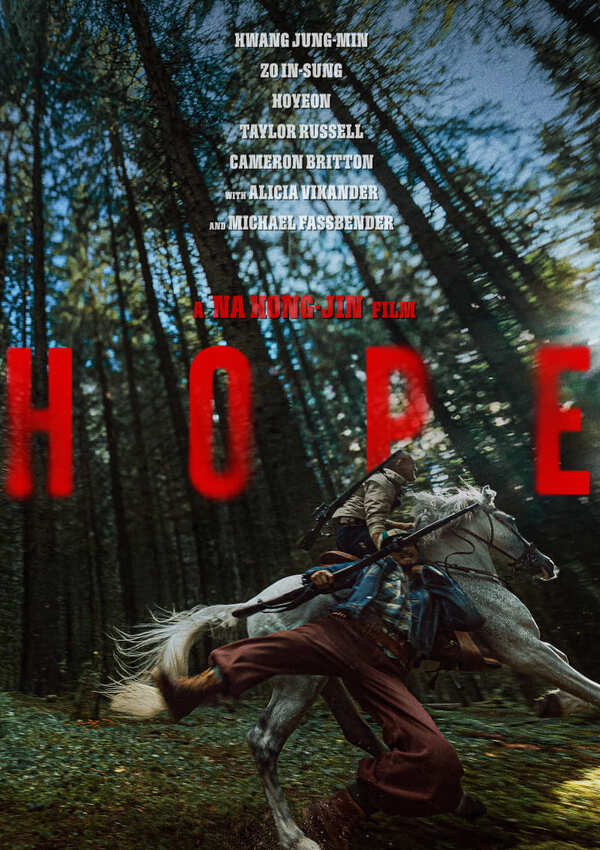
HOPE
– NA Hong-jin
It deals with incidents caused by an unknown entity discovered on the outskirts of ‘Hopo-hang’, a fictional port village near the Demilitarized Zone (DMZ).
As the involvement of extraterrestrial beings was hinted at through Director Na Hong-jin’s SNS, it reveals the possibility that this work will unfold in a form where action and SF settings are combined.
This genre occupies an unusual position even within the Cannes Film Festival lineup, and Cannes’ selection makes one expect a directorial attempt that goes beyond simple genre fun in this film.
Also, considering Na Hong-jin’s filmography, there is a high possibility that this work will also sensuously describe the psychology of characters through intense direction.
Notre Salut
– Emmanuel MARRE
A film reconstructed based on a real person (the director’s great-grandfather).
It covers the process of ‘Henri Marre’ attempting to be incorporated into the regime during the early establishment of the French Vichy government in 1940.
Through the director’s words regarding the ‘banality of evil’ and ‘attempting to flee to a safe place’, it strongly suggests a narrative revealing how helpless an individual is within the flow of the times.
The information that the comedy genre is mixed in provides a glimpse that it is portraying such a society satirically.
The background of the director, well-known for documentaries, leads to the guess that the pain of the era will be implemented in a cynical and realistic manner.
Fjord
– Cristian MUNGIU
The first English-language film by Director Cristian Mungiu and his 5th invitation to the Cannes Film Festival.
It is a film that tensely deals with the conflict of values between an immigrant family and the local society as a family consisting of a Romanian father and a Norwegian mother moves to the Fjord region of western Norway.
As tension arising from ethical issues based on a realistic method of expression is a strength of Director Mungiu’s direction, it appears that this film will also pressure the audience through the tension provided by the friction between a conservative family and an open society.
The Birthday Party
– Léa MYSIUS
A film based on the novel ‘The Birthday Party’ by Laurent Mauvignier.
While celebrating ‘Nora’s 40th birthday, unidentified people appear, and she comes to face her past.
If the director’s previous two films started on the premise of a crack through physical deficiencies or conditions, this work differentiates itself in that an invisible crack invades.
However, the structure where the character’s inner self is shaken the moment a hidden crack is revealed is in contact with the previous work , and there is a high possibility that this flow will act as a key device for delivering the narrative this time as well.
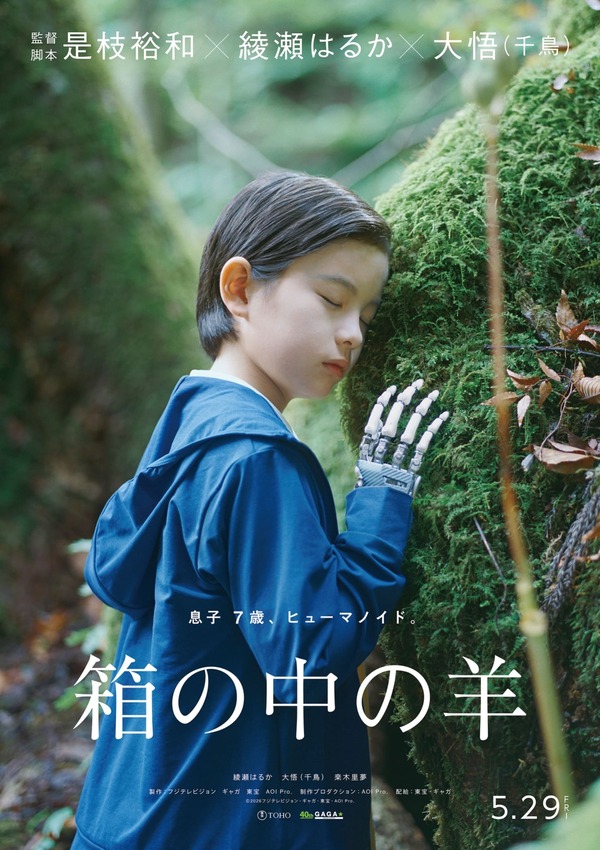
Sheep in the Box
– KORE-EDA Hirokazu
In the near future, two parents who lost their son two years ago bring a humanoid in the image of their son into their home.
It deals with the conflict experienced by the humanoid between the mother, who believes him to be her son, and the father, who tells him to call him ‘uncle’.
Considering the director’s world of work, which has steadily explored the forms and relationships of families, this work is also read as expanding in a direction that asks again the concept of ‘family’.
Also, recalling the directing method that has developed narratives by separating the perspectives of characters, there is a high possibility that a structure where the viewpoints of the mother, the father, and the humanoid intersect to reveal the cracks in relationships and gaps in emotions will be central.
NAGI Notes
– FUKADA Koji
Set in the quiet village of ‘Nagi’, it follows the life of sculptor ‘Yoriko’, who lives in the shadow of a past love.
Her daily life faces a change as ‘Yuri’, an architect and the family of her ex-husband living separately in Tokyo, pays a visit.
It is being mentioned as a drama centered on the story of two women regarding art, memory, family, and friendship, as well as internal conflict and the healing of wounds.
Considering the director’s previous works that explored the internal psychology and its values while following an individual, it appears that the process of the two women realizing their own lives and self-worth will be delicately developed in this narrative.
Gentle Monster
– Marie KREUTZER
A famous pianist who moved to the countryside for a new life discovers a truth that will shake their life.
It is a story of facing complex issues of love, trust, and deception through this.
The keyword ‘truth’, repeatedly mentioned in various media, can be understood as emphasizing the ‘true meaning’ while simultaneously pointing to a reversal in the narrative.
As the director has led narratives centered on the female gaze several times, interpretations are suggested that the story will be developed centered on female agency.
While it is difficult to conclude this, there is a high possibility that direction through a female gaze will continue as a female character is the protagonist.
Moulin
– László NEMES
It intends to deal with the spirit as a ‘humanist resistant’ through the activities of ‘Jean Moulin’ to rally the French Resistance during World War II.
The fact that keywords such as ‘torture’ or ‘death’ are identified suggests that it will cover the life story of Jean Moulin from his parachute drop to his death.
Given that the director’s filmography consists of period dramas and includes political situations, this work appears likely to continue such content.
Even more, in that it deals with the life of a person who was at the political center at the time, it is viewed that this will be the work where the political character stands out most among this year’s Cannes Film Festival lineup.
Fatherland
– Pawel PAWLIKOWSKI
Produced as a black-and-white film and a biographical drama based on a true story. It is set in 1949, the early Cold War.
The Nobel Prize-winning writer ‘Erika Mann’, who went into exile in the United States in opposition to the Nazi regime, and her daughter cross a ruined Germany in a car, facing cracks in their relationship and the wounds of the era.
Following previous works that depicted the reality and psychology faced by individuals within historical situations, this work also appears to share the same theme.
The brilliant career as an actor, journalist, and rally driver suggests that ‘Erika Mann’ will be depicted as a character with a strong personality, showing a unique narrative.
Also, there is a high possibility that the focus will be placed on the disconnection and communication of relationships by contrasting the relationship between father and daughter with the divided political situation.
If you are curious about the remaining Cannes Film Festival invited films not covered in this post
Note: All movie posters and stills used in this analysis are the property of their respective copyright owners and are used here under Fair Use for critical review and educational purposes.