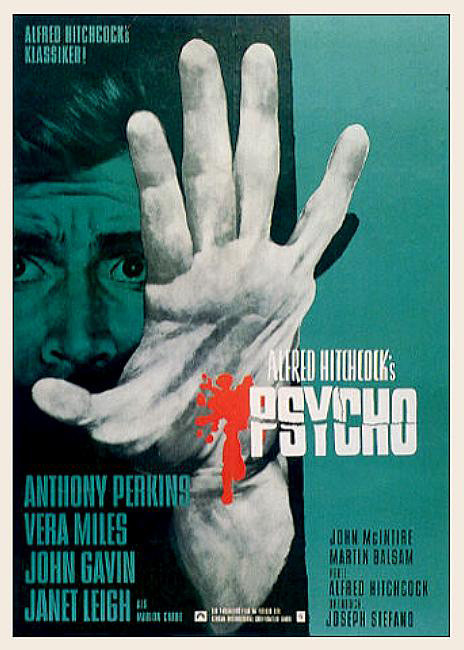
The term MacGuffin played a crucial role in establishing Hitchcock as a structural architect. Truffaut’s interview led to his re-evaluation from a commercial director to an auteur. The concept frequently invoked in this process was the MacGuffin. Despite the many remarks Hitchcock left regarding the MacGuffin, its current definition has not converged into one. Amidst this confusion, defining the $40,000 in Psycho as the quintessential MacGuffin has become a common interpretation. To agree with this conventional wisdom, which has now hardened like a correct answer, is difficult, as the $40,000 in Psycho functions as a core tool of a sophisticated plot. Through this text, I reinterpret the function of the $40,000, a textbook example of a MacGuffin. Furthermore, I intend to demonstrate through Psycho why Hitchcock must still be called the master of suspense, even if the MacGuffin is excluded. This piece assumes the reader is familiar with the key plot developments of Psycho.
MacGuffin: A Labyrinth Created by a Broad Definition
The characteristics of a MacGuffin as stated by Hitchcock are as follows: it is an object of vital importance to the characters, but one the audience does not care about. Thus, it provides a direct basis for the characters’ narrative actions, yet the audience is more interested in the characters themselves. The wine bottle or the uranium inside the wine bottle in his film Notorious is a representative example. Hitchcock recalled that while discussing this case, he suggested that if one disliked uranium in a bottle, it could be replaced with diamonds. At least in the case of Notorious, it demonstrates that the specific physical reality of a MacGuffin is substitutable. However, it is difficult to bestow functional precision upon its meaning with such a definition alone. Many narratives consist of character activities to occupy or maintain life, emotions, relationships, or physical objects. Through this, various emotional responses are elicited from the audience or reader. Not every object serving this function can be called a MacGuffin. If the concept of a term is broad, it is difficult to find the meaning of its use. Nevertheless, to speculate why the word MacGuffin has been used so frequently, perhaps it was utilized as an object to solidify the script at the beginning of the writing process. In other words, it may have served as a creative trigger.
It remains necessary to examine whether the $40,000 in Psycho fits the MacGuffin even within the broad sense Hitchcock described. The $40,000 carries the meaning of a monetary object. Background knowledge regarding the impact of monetary objects on an individual allows the audience to feel the character’s impulse and anxiety without explanation. If this were not a monetary object, Marion’s impulse to flee could not be explained, necessitating a reconstruction of the narrative. The moment the $40,000 is replaced with government secrets, the extremely private and primal reason for flight held by the ordinary citizen Marion loses its place. It does not meet the substitutability mentioned earlier. The point that it is a crucially important object to the character must also be viewed separately. Until the midpoint, these elements are sufficiently reflected. In the process of flight and pursuit surrounding the $40,000, the audience feels anxiety and nervousness. However, the content after the midpoint is different. After the Bates Motel, the importance of the $40,000 is lost, and the story unfolds around the survival of the missing person. The fear of death and the brutality of murder stimulate the audience’s anxiety and terror. Now, characters seek Marion, not the $40,000.
Designed Naturalness: The Shift of the Narrative Center
In fact, whether the $40,000 is a MacGuffin or not is not the core issue for understanding Psycho. What we must observe in the transition after the midpoint is not the replacement of a MacGuffin, but the fact that the flow of the story shifts so naturally that we do not perceive it. The object of Marion’s anxiety shifts from pursuit to a threat to life. At this point, as the perspective shifts to Bates, the direction of anxiety shifts back to pursuit. From then until the conclusion, the audience experiences frequent transitions between pursuit and a threat to life, giving the audience no time to become accustomed to one type of anxiety.
The Aesthetics of Asymmetry: Tension Created by Who Knows What
Hitchcock’s suspense operates on mechanisms larger than the MacGuffin. One of these is information asymmetry. Tension is induced by distributing information unevenly between the audience and the characters. Hitchcock provided such an example: a bomb is planted under a table where two people are sitting. If this bomb simply explodes, the audience experiences 15 seconds of surprise. However, if the audience knows in advance that the bomb will explode at 1:00, they feel 15 minutes of suspense. This is because the audience feels an impulse to warn the two people as the clock hands approach 1:00. The audience feels tension by being granted more information than the characters. This device was also utilized in Psycho. The presence of the police pursuing Marion’s flight, the fact of Marion’s death being known in advance, and the information that the murder scene at Bates is being concealed are given to the audience first. The audience recognizes the threatening situation of the characters through information they already know. Because the characters do not know this information, the threatening situation intensifies, and as this situation continues, a stronger tension is felt.
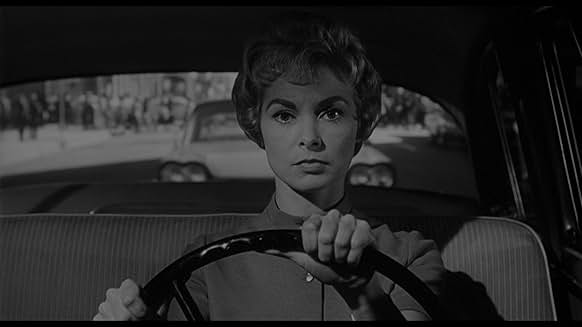
This film proves its high acclaim by utilizing information in yet another way. The director skillfully remains silent in specific parts. By providing limited information to the audience, he leads them to imagine, and this imagination induces tension. Even until the moment Marion begins her flight, no clues are provided to predict her impulse. Although the flight has already begun, the audience does not immediately sense the fact of the flight. Rather, she appears to still be in her daily routine, exchanging nods with the boss at her workplace, but soon implies a tense situation with a serious expression. Only upon encountering the police does the audience become certain. The audience must imagine to understand these sudden changes in the character, and this imagination leads them to immerse themselves in the film. Furthermore, imagination creates opaque conclusions. This makes it impossible to be certain of the following situation, maintaining tension as one does not know what scene will follow. The existence of Bates’ mother operates in a similar fashion. Through the mystery of the mother, who exists but is not shown, the audience must predict for themselves what kind of person she is and what scenes will occur through her.
The term MacGuffin has become common, but Hitchcock’s suspense remains unrivaled. Hitchcock subtly draws the audience into his designed films, letting them feel it directly. Psycho demonstrates this cinematic essence. Although his films have been consumed through critical language, audiences who truly want a cinematic experience find it difficult to find a theater. The effort to find a MacGuffin in this film is overwhelmed by sophisticated cinematic achievement. “MacGuffin is nothing,” his remark may have been a guide to experience the collision of senses occurring on the screen as they are, rather than getting lost in the trap of words.
Note: All movie posters and stills used in this analysis are the property of their respective copyright owners and are used here under Fair Use for critical review and educational purposes.