The Best Picture lists of the Academy Awards in recent years have served as a roster of reportage, pinpointing exactly where the social maladies of this era reside. The Oscars focused on how stylishly a social message could be delivered, and the film industry offered its applause. Regrettably, however, the cinema I loved was never such a medium. The shock I experienced from Titanic in my first theater visit was not because it discussed class rebellion. I marveled because it aesthetically and sensorially realized the sublime process of gazing upon and letting go of one’s most beautiful days. In my next visit, I was captivated by the fact that The Sixth Sense could demonstrate familial love through the device of suspense, rather than serving as an indictment of the marginalized. I came to realize that there are expressions only cinema can provide, and thus, I came to love cinema.
Recent selections by the Oscars have not focused on such artistic experiences. Parasite meticulously dissected social hierarchies, and Nomadland reported on the existence of a forgotten group. The Oscar jury has effectively become an editorial board, acting as editor-in-chiefs who evaluate the sophisticated prose once exhibited by famous journalists. I expected the arrival of Paul Thomas Anderson’s One Battle After Another to serve as a sharp rebuke to this Oscar trajectory. I visited the theater without any prior knowledge, hoping once again to be struck by the shock that only cinema gives. However, my expectations were soundly defeated; the Oscars have dismantled even the final bastion of aesthetics—Paul Thomas Anderson.
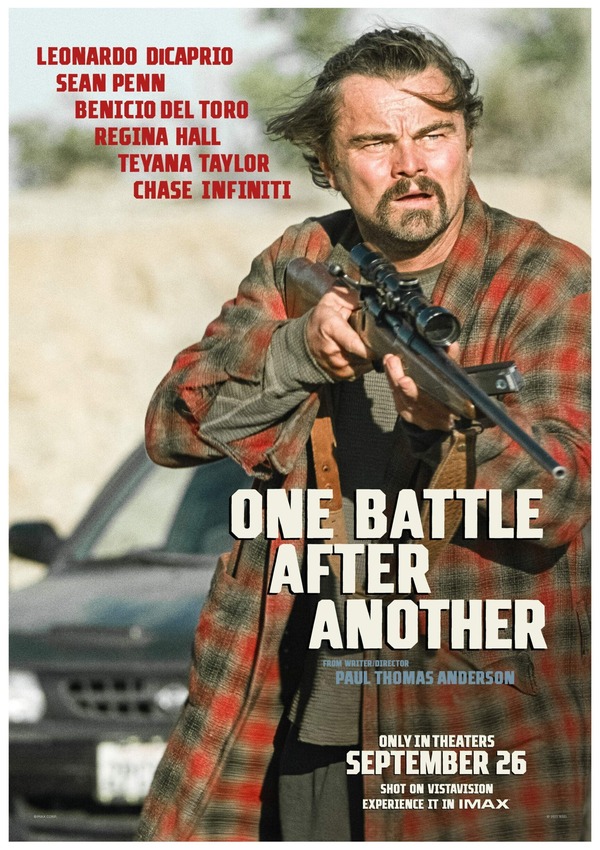
The Allure of Sensationalist Journalism
This is not to say that the cinematic expression in One Battle After Another is poor. Despite a runtime nearing three hours, it maintains a remarkably high level of immersion, and its sense of pace is impressive. The problem lies in whether the scenes we witnessed over those three hours were cinematic brilliance or an explosion gracing the cover of a journal. What captured our gaze was not artistic imagery, but provocative development. The moment a viewer becomes engrossed in searching for social metaphors rather than feeling the interiority of the characters, they are merely captivated by sensationalist journalism.
The reason a Paul Thomas Anderson film is difficult—or rather, why people perceive so-called difficult films as such—lies in an intended unkindness. The long takes frequently seen in Anderson’s work are the height of this unkindness. Despite being Hollywood films, they do not fragment characters or situations, showing long scenes as they are to help the audience immerse themselves and receive the work sensorially. However, the plot of One Battle After Another allows no room to breathe. The opening scene—Perfidia Beverly Hills (Teyana Taylor) gazing at a migrant detention center from a bridge—was sufficient to heighten expectations through quiet tension. But that expectation soon turned to disappointment upon realizing the scene served no purpose other than explaining the revolutionary activities of a group called French 75. The subsequent encounters with Bob Ferguson (Leonardo DiCaprio) and Lockjaw (Sean Penn), the conflicts between characters, and the eruption of crises were structured in a chain reaction. While this process provided taut tension, it was too hurried to allow for sensorial imagery.
Furthermore, each scene possessed sufficient logical probability to function as a kind film, leading the audience to view and interpret exactly as the director intended. This film has hired a gracious docent rather than a haughty artist.
The numerous synopses constituting the film—French 75’s support for migrant freedom, their persistent terrorist-like activities, the Christmas Adventurers Club being a white supremacist capitalist club—already provide kind footnotes regarding what they signify and how the director views them.
Jonny Greenwood’s score was an excellent accomplice to this hurried plot. Behind the dramatic progression and deep immersion lay Greenwood’s music. The inscape of Bob Ferguson’s character shifts from a rebellious figure to a social one, from serious to comedic, carrying the film’s message in various forms. The music allowed the audience to maintain tension without losing their way in this extreme pacing. Regrettably, this accomplice even faithfully performed the role of a message-bearer. The music of a gifted artist was essentially utilized as a social slogan. On screen, kindness cannot be a virtue. A signpost designed to prevent one from getting lost robs one of the opportunity to see various landscapes.

The Microscopic Conflict and the Legacy of Revolution
The macro-structure of this film consists of French 75’s revolutionary movement and the white supremacist activities of the Christmas Adventurers Club. What is unique is that there is no direct confrontation between these two organizations; rather, they seem indifferent to one another. Each group is immersed in its own ideology, focusing on its propaganda. Instead, from a microscopic perspective, the primary conflict is between individuals outside the core groups: Bob Ferguson, who has quit French 75, his daughter Willa Ferguson (Chase Infiniti), and Lockjaw, who aspires to join the Christmas Adventurers Club. This suggests that while the film discusses revolution as a legacy of the past and the life that follows, it also posits that followers are far more threatening and aggressive than the politicians and capitalists who safeguard the ideology.
The depiction of French 75’s activities as migrant freedom work actively implies they are a group for social minorities. However, their violence and lack of a precise message suggest they represent the active, combative rebels of an era rather than a specific target. The scene where Beverly Hills engages in provocative behavior at the site where she and Bob Ferguson planted explosives conveys the message that their actions are consumed by sensationalism. Additionally, the contrast between Lockjaw’s prior knowledge of French 75’s activities—used to blackmail Beverly Hills—and the scene revealing his unconventional sexual preference of being submissive satirically depicts the establishment and male supremacy. Beverly Hills shooting and drinking while pregnant, and eventually resuming revolutionary activities out of jealousy toward her own daughter after birth, allows for an interpretation that their activities are personal rather than ideological.
It is also noteworthy that Bob Ferguson’s internal form differs from that of Beverly Hills. Scenes of Bob raising his daughter Willa, keeping her in check while living a life steeped in drugs and alcohol, visually demonstrate that he is a legacy of the past—either an escapist hippie culture or a figure absorbed into society after the revolution. His struggles in saving his daughter—forgetting passwords, falling from a roof, getting lost—satirically reveal that the absorption or lost dissolution of the past revolutionary generation is disconnected from current revolutions. DiCaprio’s comedic performance refines this satire.
The Screenplay as an Explanatory Note for the Era
Since this film is an adaptation of the novel Vineland, it can be interpreted as a depiction of the radical 1960s anti-establishment movements. However, in a modern sense, it could also represent subsequent anti-establishment activities or the Protester named as TIME‘s Person of the Year in 2011. The fact that an imprecise message serves as a powerful lure rather than a cause for dissolution aligns with modern anti-establishment movements—which expanded among the public due to blurred messages—unlike the 1960s movements, where the loss of a goal led directly to dissolution.
Evidence for this is found in the setting of the Christmas Adventurers Club as both a white male supremacist group and a secretive political or capitalist entity, which naturally leads to an interpretation pointing toward the current administration and its conservative followers. Though the story begins with a legacy of the past, it ultimately speaks to the ongoing present. This is why the film is titled One Battle After Another.
Performing such an interpretation is not particularly difficult. One need only open X to see the film’s conflicts mirrored in text. Direct depictions that are embarrassing to call interpretations lead to an evaluation that this is closer to an explanatory text than a literary one. Placing a hurdle of knowledge rather than sensation before the audience and assigning them the role of a detective to solve it was sufficient to satisfy the intellectual vanity of the Oscars.
Conclusion: For the Screen, Not the Monitor
Films with a social-critical eye are, of course, necessary. I quite like the director Ken Loach as well. What I fear is that the cinematic mainstream, including the Academy, is changing. A film industry that once agonized over how to show and what to make one feel is now agonizing over what to show and how to metaphorize it. If the film world abandons the tradition of valuing cinematic expression, it is an act that crushes both the experimental will of young artists and the expectations of audiences waiting for a cinematic experience.
The migration of the modern film audience from the screen to the monitor is an undeniable trend of the times. It is also clear that within the monitor, amusement and interpretation are more important than the intuitive experiences of the past. However, if the screen begins to follow the grammar of the monitor, it is an act of deception against the audience that still seeks the screen. A theater must screen cinema. That is the core of maintaining the theater.
I still hope, while watching film trailers, to recall the abstract adjectives I once felt on the screen, rather than the dry noun-ended headlines provided by the news.