Director Na Hong-jin’s Hope has been invited to the Competition section of the 79th Cannes Film Festival. Although the release date has not been finalized, it is scheduled for this summer in Korea. In anticipation of the film’s release, this post examines Director Na Hong-jin’s cinematic world. Through the three films in his filmography referred to as the Trilogy of Evil in Korea, I intend to point out from what perspective Hope can be gauged.
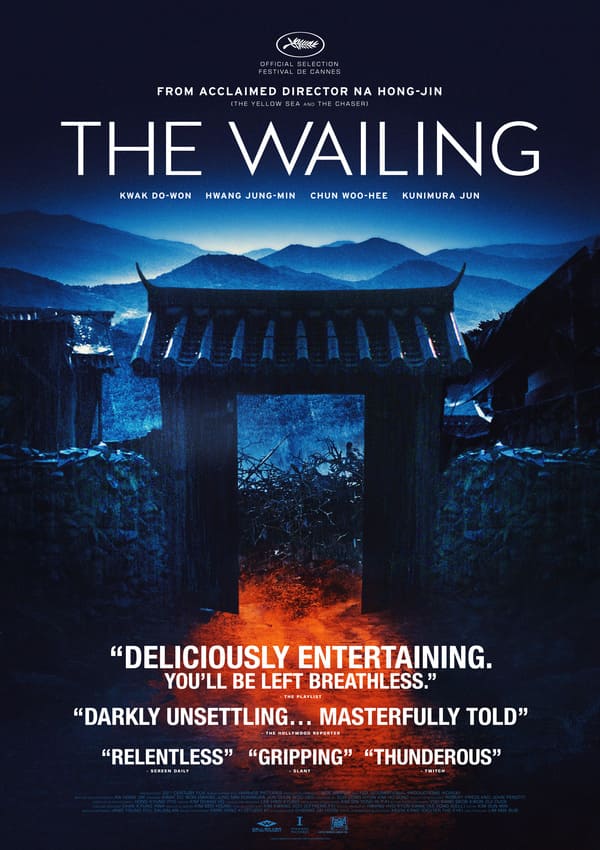
The Wailing
Since supernatural phenomena are the main subject, the method of intermittently providing clues that stimulate the audience’s imagination feels impressive. While the director’s previous works constructed premises and narratives through scenes, this work appears to be a notable change in that it replaced them with dialogue to some extent. However, it does not mean there is a lot of dialogue, and many scenes that allow for sensory experience due to the characteristics of the genre appear, appearing to be used to supplement these scenes. Inducing horror and tension through brutal scenes can be considered an element that runs through the director’s filmography. Because it deals with an unknown being, the point of connection with Hope is expected to be relatively high. Through this work, the director follows the psychology of characters who are emotionally driven in the face of surreal situations, showing a narrative that unfolds through continuous twists. Through this, one can vaguely gauge what impact the sci-fi events occurring in Hope will have on the characters’ psychology and the narrative.
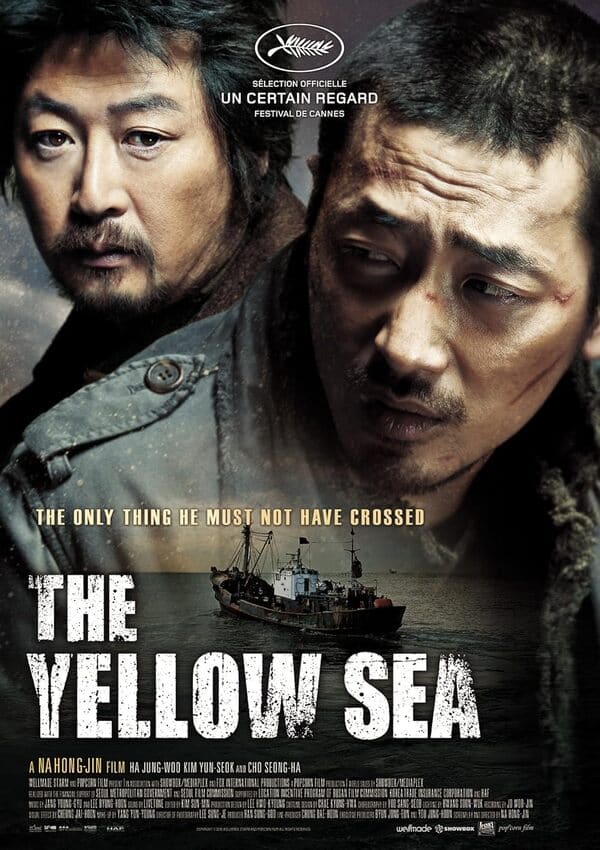
The Yellow Sea
While The Chaser directly revealed situations and showed rapid progression, The Yellow Sea tends to proceed relatively slowly. This leaves room to follow the narrative even with minimal dialogue. It shows a tendency to make the audience follow as if checking scenes one by one, rather than participating in the narrative. The shaky angles work in a way that sensorially conveys the confusion held by the characters. It explicitly shows brutal scenes and strongly induces horror and tension. Through the point of having dealt with the anxiety and horror experienced by characters in extreme situations, one can gauge how the emotions humans will reveal in front of the existence of aliens in Hope will be shown. Also, as the upcoming film has previewed intense action, one can anticipate in advance how such explicit and tense action will be varied.
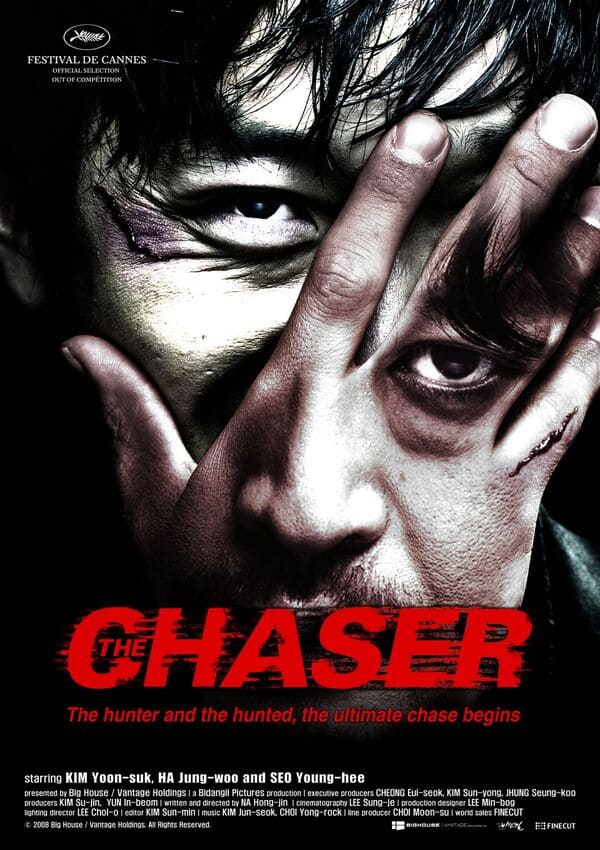
The Chaser
Explicit and desperate. The film accurately pinpoints the positions where the audience feels uncomfortable. Various devices are in place so that changes in characters’ psychology and relationships are naturally accepted even amidst rapid progression. This film makes the audience perceive the information the characters are looking for more quickly and clearly. As a result, the audience feels anxious while watching the characters being sucked into anxiety. Direct and provocative descriptions make it impossible to avoid unpleasant sensations. In this film, the director chooses a method of bringing the brutality of violence to the forefront. It is a film where the grammar of suspense, such as information imbalance and time pressure, works effectively. Visuals that stimulate anxiety through shaky angles, which are repeated in the director’s later works, are revealed in earnest in this work. The repetition of short takes induces tension and sometimes controls the strength of the rhythm through long breaths. Having shown a thriller with the director’s clear colors, it seems highly likely that a structure inducing tension in the audience will continue in Hope.
Note: All movie posters and stills used in this analysis are the property of their respective copyright owners and are used here under Fair Use for critical review and educational purposes.