If one chooses We Live in Time as a romance film, drawn by its romantic poster, they will likely experience significant bewilderment. Rather than a romantic melodrama, this film poses weighty questions about what remains when we depart, through a story of a person’s life and death.
However, whether the film’s structure supports such a heavy theme is another matter. The way the film poses its questions is as confusing as the disorientation created by its romantic atmosphere. The disjointed plot grants the audience no space for contemplation, and high-intensity exposure scenes leave only a sense of incongruity without sufficiently capturing the theme. The audience is left to scrape together scattered motifs to vaguely guess the film’s intentions. Despite the acclaim for Andrew Garfield and Florence Pugh’s acting, I intend to specifically examine how the structure of this film obstructs the viewer’s appreciation. The following analysis contains full exposure of the narrative’s terminal points.
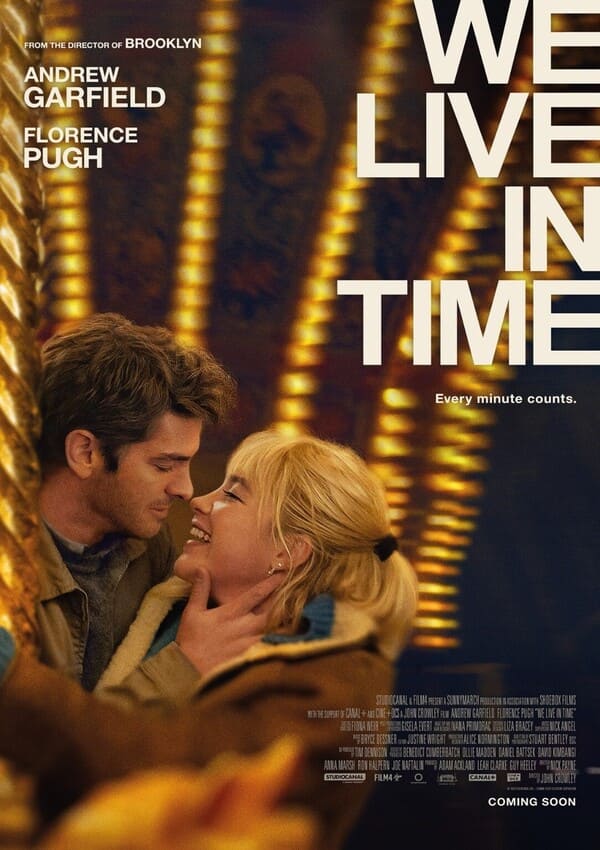
A Rapidly Pivoting Disjointed Structure: A Plot That Advances While Leaving the Audience Behind
Non-linear structure is a technique widely utilized not only in film but also in literature. This film opts to fragment a single flow into several segments and intercut them. This allows the audience to personally experience the basis of the characters’ emotions, thereby sharing the same feelings.
However, achieving such shared sentiment in this film is difficult. The suddenness of the transitions in the disjointed direction is the primary cause of this obstruction. By shifting timelines without clues, the plot moves forward while leaving the audience behind. The audience must spend time figuring out where they are while remaining stationary. Meanwhile, the narrative flows, and the audience is forced to give chase. Clues like a stopwatch are provided during this process, but they are insufficient. A navigation system that only announces right turns cannot guide one to a destination. Even if physical clues are provided, the emotional connection is severed, meaning the audience’s recalculation of the path continues. Before such disjointed emotional lines, the audience encounters unexpected subsequent emotions even before processing previous ones. In this process, the audience is tossed about, experiencing a kind of emotional motion sickness.
In this film, the characters’ emotions change along with the timelines. A scene accepting a serious situation suddenly shifts to a different timeline, and soon a comic scene appears. Before the emotional resonance and solemn contemplation from the serious scene can settle within, the audience is swept away by the abruptly changed atmosphere and pushed out. A structure that failed to embrace the depth of the theme is instead repelling the audience. Tone adjustment through humor is a definitive device that smooths a film. However, the humor in this film protrudes harshly and trips the audience. The audience, unable to decide where to place the existing heavy imagery due to the suddenly appearing humor, loses their way. It is akin to being on a tightly scheduled tour package where one is forced to move by a guide even before the viewing is finished. The film follows the plot again, leaving behind the immersion broken by the sound of the humor’s whistle.
Direct Direction Bordering on Stimulus: Emotions That Evaporate Instead of Resonating
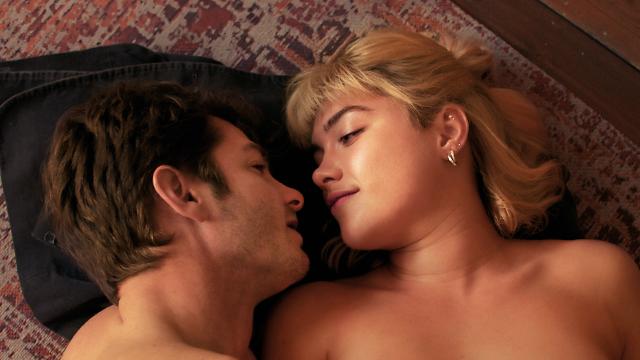
In this film, which deals with themes of life, death, and family, the exposure scenes used several times show a significant disparity from the overall texture of the film. Unless there is sufficient aesthetic justification, exposure scenes are consumed as mere stimuli. This provides a strong impact, but it is equally volatile. For emotion to remain as resonance, time is needed for it to settle into the deep interior. However, direct and intense expression leaves stimulus rather than resonance.
Beyond the weight of the theme, the method of expression itself is incongruous. If the film adopted romance as a process of forming a family, presenting it provocatively interferes with the organic connection between the theme and the scene. Concentrated expression creates a dissonance with the sanctity of life and death or the family that this film seriously presents. The theme becomes obscured by the intensity of those scenes, obstructing solemn contemplation. Regarding the portrayal of love between partners, one must consider whether those scenes were truly necessary. Showing things directly can be an easy solution. Rather than that, expressing things indirectly can solidify the intended message. The distinction in direction is determined here. Direct expression makes the audience observe, but indirect expression allows for stronger imagery and deeper resonance through the process of imagining. Mise-en-scène in film gains meaning when it includes things the audience can imagine and interpret beyond the direct meaning of the scene.
The fact that the birth scene is considerably long and direct also leaves ambiguity regarding its necessity. While the meaning of the two people’s hardships and the sanctity of the birth they face at the end is sufficiently understandable, it was still remarkably direct. Childbirth is a natural process of producing sanctity amidst physical pain. The issue lies in whether the film sufficiently reflected the director’s intention while depicting that scene so lengthily and directly. Direct expression fixes meaning to what is visible. In that birth scene, it becomes impossible to be certain whether the direction’s aim is sanctity and difficulty, or the unpleasant sensation provided by physical pain and an unhygienic space. The pain of childbirth and the unpleasantness of the situation are read before the sanctity of birth, blurring the direction.
Direct expression imposes a limited framework on the audience. While meanings appear simpler and clearer as visual expressions become more direct, the framework narrows accordingly, causing the audience to lose the opportunity to expand their thoughts and imagery. The closer the ceiling is, the better the patterns are seen, but there is that much less room to jump. The repetition of direct expression and the presentation of a solemn thematic consciousness conflict, diluting the essence this narrative intends to provide so that it cannot be recognized.
Narrative Subversion Lacking Context: The Emptiness Left with the Audience at the End
The sudden presentation of a conclusion makes it confusing what exactly the film intended to present. At the beginning of the film, it seemed it would show a process of well-dying, accepting death and preparing for it. However, it soon depicted the beauty in the process of love between partners and the formation of a family. Then, just before the film ends, it concludes with a message that the protagonist wants to leave something behind so her child can confirm her value even after life ends. Whether competing in the contest is for herself or for her family is presented as a single sentence at the very end. The audience, who had been viewing the film’s theme as self-realization or the struggle of the remaining time, witnesses the process of that theme being replaced by a valuable legacy and experiences their emotional immersion ultimately becoming a misinterpretation.
The audience must follow the protagonist-centered emotional line and then reinterpret the previous process through the protagonist’s final words. The audience feels a sense of betrayal regarding the fact that their cognitive or emotional efforts have become meaningless. As the understanding of the narrative built thus far is invalidated by a single word from the protagonist, the place of immersion is replaced by emptiness. Instead of a natural flow, the audience is forced to revise the theme they were contemplating due to a sharp pivot.
The film seems to have intended to contain philosophical themes of life and death within the format of a romance. The intention to convey a potentially heavy theme without being overly burdensome can be seen positively. However, dealing with various stories with density is different from shaking the focus of the theme and confusing the audience. We Live in Time failed to deal with a single theme in depth, nor was its structure such that the audience could clearly follow the theme. The mise-en-scène was more preoccupied with revealing things directly before the eyes than opening them up for the audience to enjoy for themselves.
The most regrettable point is that it could have remained a sufficiently good film. The good acting and the attempt to unfold the story lightly showed potential. The failure in the process of utilizing the structure and the direction relying on stimulus became mistakes that ultimately buried that potential without completing it.
Note: All movie posters and stills used in this analysis are the property of their respective copyright owners and are used here under Fair Use for critical review and educational purposes.